Εμφάνιση αναρτήσεων με ετικέτα politics. Εμφάνιση όλων των αναρτήσεων

15 Δεκεμβρίου 2020

Virtual Roundtable: Preparing Democracies for Pandemics (Webinar @ Counsil on Foreign Relations)


The WEBINAR on Youtube

Thursday, November 19, 2020

Speakers
 
John Gerrin,Professor of Government, University of Texas at Austin
Ilona Kickbusch,Founder and Chair, Global Health Centre, The Graduate Institute Geneva
Presider,Thomas J. Bollyky, Senior Fellow for Global Health, Economics, and Development, 
 
Council on Foreign Relations, Global Health, Economics, and Development Roundtable Series


SOURCE:  https://www.cfr.org/event/virtual-roundtable-preparing-democracies-pandemics

The coronavirus pandemic has not been an advertisement for the healthy effects of democracy. There have been some notable success stories among democracies, but it is also true that nine out of the ten nations with the highest cumulative COVID-19 cases are democracies. One possibility is that the mechanisms that ordinarily produce better health in democracies—accountability through free and fair elections and freedom of expression—may not function to produce the same result in a pandemic. In this Council on Foreign Relations roundtable, Drs. John Gerring and Ilona Kickbusch discuss this possibility and their work from a new BMJ series on democracy and health.

Thomas Bollyky: Well, thank you. Welcome. My name is Tom Bollyky. I’m the director of the Global Health program at the Council on Foreign Relations. It’s my pleasure to welcome you to this roundtable entitled, “Preparing Democracies for Pandemics.”

It is fair to say that the coronavirus pandemic has not, to date, been an advertisement for the healthful effects of democracy. Several of the countries that have acted quickly to contain COVID-19, such as South Korea, New Zealand, Uruguay, are democracies, but as of yesterday when I last looked, eleven out of twelve of the nations with the highest number of cumulative reported cases are democracies too. This mixed performance of democracies represents a departure from the success of this political system in confronting other health challenges relative to other forms of government.

Today, in this roundtable, we are going to discuss why the potential mechanisms that connect democratic government to better population health may not work as well in a pandemic—and we’re going to also discuss how to better prepare democracies for future pandemics. In doing so, I’m going to commend to you a new special collection of articles recently published in the BMJ on democracy and health that considers these questions. I will concede I am biased because together with Ilona Kickbusch, one of our great speakers today, I was a guest editor of the series, but it really is well worth your time, and I recommend it to you. Both the series and its publication in the BMJ were made possible by a generous grant from Bloomberg Philanthropies, for CFR’s involvement and my involvement, and with support from Konrad-Adenauer-Foundation to the Graduate Institute of International Development Studies for the involvement of Ilona and her great team.

I’m really pleased to have two terrific speakers today to help us explore this topic, generally, and this series. I am going to grossly truncate their biographies and just tell you their current titles, but you’re welcome to look at their biographies as well. Ilona Kickbusch is the founder and chair of the Global Health Centre at the Graduate Institute of International Development Studies in Geneva. John Gerring is a professor of government at the University of Texas at Austin. Ilona is going to start us off with a few minutes on the reason for this project in the BMJ and on the continued importance of political determinants for health, democracy in particular, despite what we’re seeing in this pandemic. John is going to educate us on some of the lessons from his paper in this series on whether or not health is even politically relevant, drawing on some experimental evidence during this global pandemic.

We are fortunate to have a number of the other authors of papers from this series here as well, and I’m going to try to loop in some of them in our discussion too. With that, I’m going to turn it over to Ilona with just one caution, of course, is that this meeting is on the record. It is for attribution. Anything you say can and will be used against you as part of your vetting process for the next administration. So, keep that in mind. And with that, I turn it over to Ilona to start us off.

Ilona Kickbusch: Thank you very much, Tom. Welcome to everyone to this discussion that, of course, we think is enormously relevant at this point in time. Tom has asked me to say a word or two about how it came about. That relates to the work of the Global Health Centre at the Graduate Institute. We’re an institute of international relations and development studies, and I have long been pushing that there needs to be a stronger contribution of the political sciences and international relations to the global health debate.

 In global health, there is a strong discussion around what we call the determinants of health. Initially, the focus was on social determinants and particularly issues of inequality. That then moved on to get a better understanding of what we call the commercial determinants of health—how market forces actually drive the health of nations—and then moved on to say, what is it actually about the political determinants of health? This was also driven by the fact that the present director general of WHO very frequently says health is a political choice. And, therefore, the question arises: do certain regime types make better political choices in relation to health?

So, that was the starting point of our thinking, and I was incredibly lucky that, at the same time, Tom was thinking about things like that and had published his article around that democracy does matter in global health and that was in relation to responding to NCDs [noncommunicable diseases]. So, our interests came together, and as he indicated, we found some others who were ready to support us. We were able, with the authors, to have two meetings—one in Berlin and in Washington, DC—and then COVID-19 hit. And then our questions started to change because the question then also became: does democracy matter in response to a successful COVID-19 response? And as Tom has already indicated, it seems that democracies reacted very, very differently. Even if you take into account that there are different types of democracies, it does seem so, though, that democracies that are built on a binary system of the Westminster model seem to face, in some cases, stronger divisions than some consensus-oriented democracies. But then as we started discussing that, it took us even further that in the face of populism, of nationalism, critique of science, info dynamics—all those things that we’re going to come back to—we ended up with an even larger question that our project hasn’t yet answered, but that we are hoping to tackle in some of these dialogues. That is, and I’ll formulate it in this way, how can democracy save the lives of its citizens and itself?

And this is related to the fact that it seems many democracies, or some democracies, were not well prepared for the COVID-19 challenge on many counts. Also, in terms of their regulations, in terms of their parliamentary processes, in terms of involving their citizens. So, if we ask now, and I’ll end with that, the interest is what can we learn from the experiences of different democracies to actually say, is there a way to—and we put this in inverted commas—to actually “pandemic proof” democracies. And we’ve seen that some democracies have already started this process. Two countries I know of, both Taiwan and Germany, have already changed their infectious diseases law, for example, to allow for more participation of parliament in these big decisions. So, those are some things that we might take up as we move forward. Thank you, Tom.

Thomas Bollyky: Great, thank you so much, Ilona.

 So John: the central theory for the connection between democracy and better health is accountability. Accountability enforced through free and fair elections means governments are more motivated to provide more effective health services to a broader share of their population because they’re subject to regular free and fair elections.  But the United States has the most cases and the most deaths in this pandemic. We saw in the recent U.S. presidential election that 93 percent of the most currently affected counties in pandemic voted for the president. Despite all the U.S. challenges with COVID-19, the election ultimately swung on forty-five thousand votes in three swing states.

What does your research tell us about what we’re seeing on how democracy and that accountability function might operate in a pandemic and whether it might be different from how it operates on broader health?

John Gerring: Well, these are great questions, and I’m delighted to be here and really grateful to you and to Ilona for this initiative, which I think is really incredibly timely and important. As you know, Tom, I’ve been working on this issue of democracy and public health, and, like you, I’m convinced that there is a positive correlation, and the way that we would like to think that democracies seem to perform a little better than autocracies on measures like infant mortality, but the relationship isn’t incredibly strong. In fact, it’s, I guess you might say, surprisingly weak. And there’s also a question about why it exists at all. What are the mechanisms at work? And I think that’s—you know, both of these issues were driving, piquing my curiosity.

 So, in the paper that you’re referring to that became part of this symposium at BMJ, I teamed up with a sociologist, Aaron Reeves, and economist, Arnab Acharya, and we tried to enlist experimental evidence to address this question. I guess we’re struck not only by the weakness of this relationship between regime type and mortality, but also that in democracies, one generally finds that economic issues are more salient than health issues. And so, even now in the United States in the midst of this terrible pandemic, as you pointed out, the U.S. is one of the worst affected countries, it’s still the case that a much higher number of Americans are very worried about the economy than are very worried about the infection; this is a series of tracking polls that FiveThirtyEight has put together the past year. And we can also see that Trump’s approval ratings have held steady despite what many would consider to be a disastrous handling of this pandemic. You know, I think we’re now at about a quarter million deaths and, you know—so what is really going on here?

Well, so our approach is to develop an experiment—a survey experiment, as it’s called—where we recruit people, we expose them to different treatment conditions that convey information about the health pandemic and its economic effects, and then ask them outcome questions about politics to see if that information moves the dial—if it affects their view of the incumbent or their willingness to blame the incumbent for what’s gone wrong. I’ll give you a little bit of detail on the research design. I don’t want to get too much into the weeds, but basically, we have a survey experiment that was run simultaneously in three countries—in the United States, United Kingdom and India. So, two rich countries and one poor country—all democracies. We used a recruitment platform, known as Mechanical Turk, which is run by Amazon, and fortuitously MTurk has lots of people in those three countries, especially in the in the U.S. and India. And so, we were able to recruit over thirty-five hundred respondents in the first round, and then in a follow up round an additional two thousand respondents. And this is a pretty high-powered experiment, so we don’t have to worry too much about stochastic threats to inference.

So, there were—the way the experiment was set up is that people are randomized into these different arms or treatment conditions. The control condition—the people are told nothing, just, you know, the basics about would you like to participate in this survey. And then there was a treatment arm that conveys information about the economic effects of COVID-19 on their country. So, in the United States, we said some estimates suggests that the economy could shrink by 3.2 percent this year, 52.8 million people could end up without work, and that the value of stocks and shares could fall by around 30 percent. This was is back in April. April through June is when the first round was administered.

And then we had a health arm which conveyed information about the likely health effects of COVID. And then, we did a second round of the U.S. survey, not in India or in the UK, but in the U.S., we did a second round several weeks ago in which we, you might say, primed the treatment even more. So, we told them that the United States has one of the highest infection rates of any country in the world, that an estimated 250,000 people have already died, and that some people blame this catastrophe on Donald Trump and the Republican Party. We say according to one estimate, approximately 50 percent of American deaths—roughly 125,000 deaths—would not have occurred if Trump had publicly acknowledged the severity of COVID-19 and followed expert advice on how to manage the shutdown of schools and businesses, social distancing, and the distribution of masks. So, this is a very strong treatment—not, I don’t think, a dishonest one—but, we’re really pointing the finger.

Thomas Bollyky: Not an entirely a fanciful set of facts.

 John Gerring: No, no, not at all. We tried to keep this as real as possible, both for ethical reasons and also just in terms of generalizability.

So, the two outcome questions were: one, would you support the incumbent party and party leader if an election were held today, and two, do you hold the government at fault for allowing the disease to spread? And what we found is that there was no treatment effect across any of these treatment arms—even the strongest one that we added in the second round of the U.S. survey. And just to be very clear about this, what this means is that the respondents who were told nothing, their responses to these two outcome questions were the same, on average, as those who were given information about the severity of COVID, its economic effects, and so forth.

Thomas Bollyky: And to be clear, you found that in all three countries.

John Gerring: That is correct.

Thomas Bollyky: And is that similar to what you found on health in general?

John Gerring: Well, we did find that the experiment was effective in raising the salience of the issue and anxiety about it, but we didn’t find any political ramifications. And so, if this is to be believed, it means that there are no repercussions. As we put it in the title of the paper, it’s possible that public health—even a major pandemic of this sort—is politically irrelevant.

Now, there are a number of possible explanations for this, and I don’t want to consume a lot of time by going into them, but I’m happy to do so later on. And certainly, there are questions about the extent to which we can generalize from, you know, this one set of experiments with a sample that is not a random sample of the general populations. And there may be some special things going on, which I’m happy to elaborate on or discuss, and I’m sure people out there have some thoughts on this. So, our view is these are some pretty, I guess you might say, shocking results and we need to know more. You know, we would very much like to do some follow up work in different countries with random samples using other, you know, a variety of public health issues, not just COVID, and where we have a purely economic treatment as sort of the baseline. So that’s what I’ve got, and I’d be delighted to hear what people what people think.

Thomas Bollyky: Great. Great.

 John Gerring: Thanks.

 Thomas Bollyky: Thank you for that, John. And just to be clear, do I remember that one of the responses indicated most of the respondents considered the government was somewhat responsible for health generally, is that accurate?

John Gerring: That is correct.

Thomas Bollyky: So, one possibility is that people view pandemics differently than health generally?

John Gerring: It’s possible.

Thomas Bollyky: Possible. Interesting. All right, I’m going to try to pull in one of our participants, who’s one of our authors for a different paper, because it gets at a separate mechanism by which democracy is meant to improve health.

So, I’m going to call on Steven Wilson and ask you to indulge me on this, but I think you’ll find it really quite revealing. Steven is an assistant professor of politics at Brandeis and looked at a separate mechanism by which we believe democracy affects health—freedom of information. The theory is that in democracies when people are more able to share information freely, there will be more accountability for the government. People will also learn of more healthful practices and that feedback will inform the practice of government in providing health. So, lots of good things come–-we think–-from free expression. But I want to pull in Steven on the question of whether or not the free expression also has a downside in democracies when it comes to disinformation and social media. Please tell us a bit about your paper with Charles Wiysonge and how it connects to what we saw, perhaps in this pandemic.

Steven Wilson: Thank you very much, Tom. It’s been a pleasure to be part of this process, and we found some really interesting things in our research that I’d like to share with you. So most of my work in general has nothing to do with health. It has to do with the internet and the effect of social media on democracy and authoritarian regimes. So that’s sort of the way that I came into this.

But I think all of us have been concerned over, say the last decade or twenty years, in terms of the rise of anti-vaccination sentiment on social media, in particular, and concerns that, paradoxically, it is the richest, most educated countries that are seeing the largest resurgence in diseases that have effectively been defeated by vaccines over a period of time. And we’ve also become very aware that the internet and social media has played a major role in this spread–-the spread of Facebook groups and anti-vaccination content on Twitter and what have you. And there’s a concern here of how do we deal with this? Because, just on principle, freedom of speech matters. I don’t think we’d find very many people, especially in this call, that would argue that that’s very foundational to what we believe in. But in terms of anti-vaccination content, we’re wondering why is this happening, and what effect is it actually having? Like is it just, we can see it happening, but does it actually have an impact on real world outcomes?

And a secondary part of that is the rise in visible disinformation campaigns online where there is conscious effort by malicious actors to push false information, especially from foreign services, trying to influence domestic politics and countries. And one of the things that we’ve picked up on, through both scholarly research and then the Senate report a couple years ago that delved into this, is the overwhelming prevalence of Russians, both automated campaigns through bot networks and intentional disinformation campaigns, pushing and amplifying anti-vaccination content.

And so, what our paper tried to do was see can we actually measure some type of effect going on? So, we have lots of research that shows individually or one country case studies or experimentally, people’s exposure to anti-vaccination content having an effect. But we wanted to see is there an actual measurable problem worldwide? Like, if we look at data across every country in the world, or as many as we can get data for over the last decade or twenty years, can we actually see a measurable and substantive impact or is this just sort of concern for concern’s sake?

So, the basic design that we put together was relatively simple. We have some very good measures of the level of foreign disinformation campaigns on social media and countries from the Digital Society Project, in addition to measures of to what degree do citizens of each country use social media to try to organize offline action. Okay, so we use these as sort of measures of are people actually organizing online, so that way we can connect this to outcome measures, such as levels of vaccination rates that we got from WHO and also from survey data across countries from the Wellcome Global Monitor in terms of over time, are people more likely to say that they have safety concerns about vaccines in general. And we also took a different set of data in terms of a set of all the geo-coded tweets in the world over the course of several years and analyzed those for any discussion of vaccines and also through some sentiment analysis tools to understand whether people were negatively talking about vaccines.

And sort of the end result function that we got was, we found a very surprising substantive level of effect, where over time, a one-point shift in this five-point disinformation scale is associated with a two-percentage point drop year over year in mean vaccination rates in countries. We found that the same disinformation scale predicts a 15 percent increase in negative tweets about vaccines, and we also found that the use of social media by a population in a country to organize offline action of any kind is associated strongly with an increase in doubts about vaccine safety.

Now, there’s a lot of issues with the research that we did in terms of what we’re picking up is fundamentally correlative rather than causal, in the sense that we’re basically looking at: do these numbers on this side predict these numbers on the other side? But there is a pile of research showing the mechanism happening. And so, our look was just can we link the outcomes that we are scared that are happening to the mechanisms that we have seen in other research. And the fact that we did, I think, provides some very concerning information about the effect of social media and the internet and, in particular, it’s use by both malicious external forces through disinformation campaigns and just through the population itself, in terms of having bad outcomes, in terms of accepting vaccination.

Thomas Bollyky: That’s terrific, Steven. Thank you. And thank you to you and Charles for this great piece of work.

So many questions. I’m going to ask two to Steven first, and then I’m going to go back to John and Ilona, and then after that round, I’m going to turn it over to the audience, just so you can start to think of your questions.

Steven, I have two questions. You can answer them together, if you’d like. The first is on the scope. Obviously, your paper focused on vaccination, but from the lived experience of this pandemic, you wonder how much social media disinformation played a role in other behavioral interventions and their public adoption. So, did we see anything in connection to mask wearing and non-pharmaceutical interventions that promote healthful behavior? The second question is also timely––we’re a couple weeks away from potentially a rollout of the first vaccines. What are you and your colleagues seeing now? Is there anything you can update us on what we’re starting to see with the ramp up to vaccine roll-out? Obviously, your research looked at historical data, but this is a live issue that we’re going to see in this pandemic, and I’m curious if you have observations to share with the group.

Steven Wilson: Sure, in terms of the scope in terms of other interventions––mask wearing and such––we didn’t look specifically at disinformation about particular things like that. But we do have a lot of documented evidence over the last couple of years, in particular, of disinformation and organization around stuff besides COVID. So, for example, the 2019 Ebola outbreak, in which foreign disinformation campaigns were just pushing this overall narrative of don’t trust foreign health workers. And it led to a straight line you could draw to the dangers on the ground for foreign health workers as part of that.

But, in addition, we have some other projects in the works where we are looking at, and finding, that distinct connection of the moment that there were interventions possible––where okay we need to wear masks––there was an instant creation of disinformation networks focused around going against that. Basically, any intervention on any health issue that we come up with, there almost instantly seems to be a backlash of those that have doubts about it, and then pushing that information online.

And I think that there’s a deeper mechanism going on here, which is sort of part and parcel with how the internet works both in good ways and bad ways. Which is this notion that you might have heard of: the long tail effect, where the idea is because communication is so cheap and easy, and finding other people is so trivial through internet and social media, it means that any fringe group can find other people that agree with them and find their own little bubble and start amplifying their effect on the world. And this has some great things, like the fact that repressed minorities can find other repressed minorities and communicate and organize safely. But it also means that the Nazis and the anti-vaxers can all find each other also. And we’re kind of seeing the repeated pattern that way, in terms of both health interventions and everything outside of health also.

Thomas Bollyky: Great, that’s terrific. So, we promised, with the title this event, to also talk about preparing democracies for future pandemics And I want to do a round with our speakers where we to talk a bit about solutions, but also what you’ve been seeing in this pandemic. For each of the speakers, please put forward an idea of what you think might make democracies better, more, as Ilona put it, pandemic-proof for the future, or ideas on addressing the deficiencies and the mechanisms that John talked about or Steven talked about on the accountability—through free and fair elections for John and this freedom of information for Steven. Ilona, let’s start with you.

Ilona Kickbusch: Thank you, Tom. I think there’s a number of elements. I don’t think we’ve really realized in the past, how much the basics of democracy and particularly of demos—meaning, you know, that there is a community that people are willing to debate and discuss with each other––how important they can be in terms of health. We tend, and maybe that’s also one of the outcomes of, you know, a strong focus on American democracy, we tend to continuously highlight the individual liberties that come with democracy, the individual freedoms, the individual rights, and they are incredibly important. But a democracy is not only about me, it’s about us, and it’s the us also, you know, what you are experiencing now. I see this from afar, with the American elections, that, you know, whoever wins, then speaks for the whole country and tries to move it forward.

So, some of the real basics of how our modern democracies function come to the fore in a situation of a pandemic. I think that’s one issue that we need to look at much more carefully, and we see that. We also see that a lot of our pandemic preparedness plans, laws, regulations, etc., are actually made for very short pandemics. You know, it’ll be over in three weeks kind of thing. And therefore, we don’t need to worry about decision making processes. I live in Switzerland, and what has made Switzerland really, really nervous is that, you know, basic functioning of democracy. The parliament didn’t meet. Some of the decisions that needed to be taken by a popular referendum had to be moved. So, if a pandemic takes a long time, your basic functioning of democracy and who takes the decision. And this is, you know, of the largest concern now also in this revision of the German infection law, particularly if you have a democracy that functions at various levels and no matter, you know, how knowledgeable your chancellor is on what exponential growth means, she still has, you know, a whole bunch of state ministers that she has to get into a consensus.

And so those kinds of issues are becoming clearer and clearer that––who has the controlling power in a democracy in a period of an extended time of a pandemic? And I don’t think we have really been prepared for that. And this is also what the colleagues from Taiwan have told us. Even SARS was relatively short term. But what happens over a period of one or two years?

Interesting, if I take, you know, John’s results is that Germany, in the first wave, went through relatively well through the pandemic. In the second wave, not so well but still better than its neighboring countries. The two most popular politicians, you know, Merkel is up there with, you know, 80 percent approval rates, but the health minister, at present, is the second most popular politician in Germany. About 45 percent of the population in a recent survey think the government is doing enough. 25 percent think they should be doing more. And in relation to Steven, yes, while this new law was discussed in parliament, outside of parliament we had, you know, very, very emotional collection of people protesting from right-wing groups to homeopaths to anti-vaxers, who are calling out the corona dictatorship and who are, if we are talking about foreign financing, by the way, actually, financed also with American money.

So, these are the kinds of tensions that are there, and you have to see which are these key points that keep a democracy stable and how big the health literacy, the digital literacy, and the civic literacy of your population is. And sadly, in many of our societies, we have deeply neglected really pushing and practicing our civil literacy, not just our civil liberties.

Thomas Bollyky: Great, thank you, Ilona. I’m going to ask John and Steven each to take a couple of minutes to answer the question as well. But for those of you that have questions, you can start raising your hand. I’m going to call you after John and Steven speak, in the order that I see you. Again, we also have authors of our other BMJ papers, including Roopa Dhatt, on the phone, who had a great paper on participation. So, I’m hoping she will get involved in this discussion, too. And I think Simon Wigley and Tara Templin also on autocracy and UHC [universal health coverage].

But let me turn to John for a couple of minutes. How important is it to have more of an accountability function attached to pandemic performance to shore up democracies? Is there, what do you think, is there something that needs to be put in place to make that more of a salient connection between pandemic performance and accountability? Or is that the wrong way to think about it? And for Steven. How do we preserve freedom of speech but still address disinformation on social media? How do we save the baby and still get rid of the bathwater? Please go first, John.

John Gerring: Well, thanks. These are these are big topics and, of course, super important ones. I’m not sure that accountability is the best prism through which to view this sort of a challenge. I think of a pandemic of this scale is like a war. And by that, I mean a total war that really threatens the entire country and requires coordination at every level. And in a war, I guess, there’s the ideal that parties come together, you know, that there’s some cross-party consensus, that they work out a plan and listen to the generals and so forth. And so, the analogy here would be you listen to the public health experts. Now, I think this is a somewhat unusual situation in that the public health experts weren’t entirely sure which way to go with this, and hence you see different, you know, countries take somewhat different directions.

But at least that that would be the prescription that I would have, and party politics doesn’t play into this so much. I think it’s more about having some kind of consensual culture, which, I guess, maybe we used to have in the United States. We don’t have so much anymore. and Ilona mentioned the problems of majority rule—first past the post electoral systems—that tend to exacerbate this sort of left, right, us-versus-them dynamic, where the out party feels its job is to criticize, no matter what goes on. And since they have a certain number of supporters, then those supporters become, you know, alienated. And that that can play out very badly because you really need everyone’s participation in a situation like this. So, I’m not sure that, I mean, maybe we can learn from this, maybe, going forward, democracies will be more capable.

But I do want to call attention to one issue that I think is sometimes neglected in this debate. Maybe I’ll be a little contentious here. I think that the public health community are people like us, you know, very highly educated, generally pretty well remunerated, and we have jobs that can carry on, you know, electronically. A lot of people don’t. A lot of people’s job depends on face-to-face contact. A lot of people are living, you know, from paycheck to paycheck, and I’m not sure that––I mean, their voice is reflected in President Trump’s rhetoric. And we can debate, what’s in their best interest. But I think we can also appreciate that their interests are a little bit different from ours. And so, I don’t think this sort of debate can be a just a sort of consult the experts type of discussion.

And in the United States, where we have a very weak welfare state, where a lot of people don’t qualify for unemployment, or not very much unemployment, you know, of course health care is a problem, and the stakes are much higher. And it’s easy to see why you get this dynamic of, no, I got to keep my job. I don’t care. I’m willing to lose lives. I think that’s a little less true in Europe where welfare states are more robust.

Thomas Bollyky: Great, thank you, John. Lots there to get back to you if we have time. Steven, I know you’ve thought about this, and we’ve talked about this in the past. What can democracies do to protect themselves against this onslaught of social media disinformation?

Steven Wilson: Sure. I think there’s sort of two levels to look at it with, which is very tactically in terms of how do we deal with COVID right now, and strategically in terms of the long run issues that we’re seeing.

So, I think the idea of fighting misinformation being intertwined with freedom of speech is sort of inaccurate. Because this isn’t a free speech issue, even if some people are insisting that it is, and this comes back to just the very, very old like cliched arguments we have where, you know, you have a right to your political opinion. You do not have a right to your own facts. You don’t, you know, freedom of speech doesn’t mean you get to yell fire in a crowded theater, like all of these kind of generic examples.

Saying that vaccines cause autism online with fake scientific information is not a free speech issue about political opinion. It’s the same thing as yelling fire in a crowded theater, especially in the middle of a pandemic. It might have been one thing a year ago or five years ago, but at the current moment this is actively hurting the health of society. So, I don’t think this is a free speech issue, so much as it’s an issue of we need to have coordinated action against misinformation online. And the social media companies have been doing a much better job over the last few months, and they have been over the last few years, I would definitely say that, in terms of trying to systematically take down just absolutely false content.

The secondary thing is the fact that intentional disinformation is playing a major role in this. And the bottom line is that we know where it comes from, and we know the motivation for it. This is coming out of pseudo-state actors from Russia––is a huge proportion of this anti vaccination amplification through bot networks––and this means that it is a political problem that has political and diplomatic solutions. If you want them to stop, apply diplomatic pressure. What the actual in between there of how do you make this happen is up to the diplomats, on some level, I think, but it’s not an unknown problem with an unknown solution.

I think there’s a larger strategic issue, though, in terms of the elements of free speech and such, going back to that right to your own opinion but not right to your own facts. At this point, there is, say, an epidemic in the middle of the pandemic, of distrust of experts and distrust of educated authority in the Western world going back for quite some time, over the last, probably, generation of politics. And this is a larger issue that we somehow have to figure out how to grapple with, because there’s a large proportion of people that simply say the expert doesn’t know what they’re talking about. The guy I know online does. And that’s a larger issue that we have to combat that I think is intertwined with the internet and is causing issues with COVID in particular, but is a larger, say, crisis of democracy in the long run if we don’t, fundamentally, have a trust of people who know what they're doing. This is a societal crisis in general.

Thomas Bollyky: Great, terrific and provocative points. We have three people in line and thirteen minutes, so without further ado, I want to turn to them. We have Henry Greenberg first, and then Roopa Dhatt, who’s one of our authors in this series, and then Sonya Stokes. Henry, please. And if everyone will state their name and affiliation when you ask your question. Thank you.

Event Manager: Mr. Greenberg, please accept the “unmute now” prompt. I’ll move on to the next question.

Thomas Bollyky: All right, we’ll circle back to you. I’m sorry for that. Roopa, please.

Roopa Dhatt: Thanks, Tom and Ilona and John. I just wanted to act on the prompt of really trying to answer a bit of the question really around just, you know, what are the other pillars really needed for a functioning democracy? And I think one of the things that this pandemic has really shown us is that we need public trust, and to really have public trust, we need to have civil society that is engaged, funded, and protected.

And part of the paper that I wrote together with colleagues, including Loyce Pace and colleagues from Kenya, as well, particularly Allan and Nerima, the perspective we really wanted to highlight there is that it’s also very critical that the decisions that are being made are truly representative of the population. So, this is a challenge in achieving the dream of democracy, do we truly have leaders in leadership that represent the population? And so, there really is an opportunity there to make sure that the civil society pillar is a way to build public trust, that civil society is engaged––civil society from diverse backgrounds, especially the most marginalized backgrounds. Every nation has an underserved community, whether it’s women, sexual minorities, migrants, abled people, and all those different groups are not necessarily represented in decision-making. And I think the point that was alluded by John earlier about the fact that there is a difference between health literacy in the population. But if we use civil society as an engagement mechanism and really, you know, bring them into the conversation when it comes to public health, it can help bring public health trust, but it needs to be an intentional part of building democracy and an intentional part of creating strong health systems. So yes, I encourage everyone to check out the paper. We do have some very concrete recommendations around this, but it is a very much part of increasing health literacy and also increasing, as Ilona said, about civil literacy as well.

Thomas Bollyky: Great, thank you, Roopa, and I’m glad you spoke up. It’s a terrific paper––I recommend it. Roopa does not just write about the role of participation and improving health, she lives it with the organization that she runs too. So, I do recommend that you check out the paper. With that, let’s try Professor Greenberg, if we can go back to you again, and see if we can manage to get you online and unmuted, that would be terrific to get your question.

Henry Greenberg: Thank you. I’m Henry Greenberg from Mailman School of Public Health. President Elect Biden’s panel on COVID does not include a single epidemiologist. And I’m just wondering, does that reflect a broader view of what American public health is doing, or does it reflect something else? You know, I have my own opinion, but it’s rather a striking observation that in what must be considered the most epidemiological phenomenon in the world, the best panel put together by a thoughtful and committed politician includes no epidemiologist. What does that tell us?

Thomas Bollyky: Provocative question, thank you for that. I’m going to give Sonya Stokes a chance to ask her questions, and let the speakers take them both. Sonia.

Sonya Stokes: Thank you so much, Tom. And thank you so much for this panel. Dr. Dhatt may have answered part of this question, and I’ll have to review her paper. Thank you so much. But the resistance, a reluctance, towards vaccines is prevalent not only among my patients, but even among some of my fellow providers across the U.S. In New York City, I’m part of a working group of physicians looking at strategies to improve vaccine acceptance within our communities. The solutions that have been discussed on this panel so far––health and media literacy––these things do take time. And even though they’re welcome solutions, are there any shorter-term solutions that you are aware of that can help us more immediately through the next several months ahead? Thank you.

Thomas Bollyky: Great question. So, to broaden Henry’s question, you know, what’s the role of trust in experts and in particular epidemiologists, and are we likely to see greater acceptance of them in democracies? And then Sonya’s question––do we need broad societal change before democracies can perform better? Or can we do something for the near and medium term? Why don’t we go through the group in order and start with you, Ilona. Keep in mind, we have seven minutes. So, let’s make sure we have time for everyone.

Ilona Kickbusch: Yeah, I leave the epidemiology questions to the American colleagues, except just saying that we have found that nearly all groups have always tended to exclude someone. You know, the social scientists have not been considered in many of the German groups. For example, we had loads of epidemiologists and virologists and whatnot, but I guess you’ll have an answer to that.

I think when we talk about making democracy pandemic proof, what we’re learning now is really that the light is being shone on those things that we have really neglected for decades. You know, like the inequality issues, like certain participation issues, like health literacy and science literacy issues. And if we look, you know, all the things that were stopped in our schools, at least in Europe—you know, learning about democracy was thrown out because, you know, supposedly you needed other things in life more than knowing how your own political system functions and what your own role in it was. So, I do think we have to face up to some of those long-term issues.

In terms of short-term recommendations, I think a lot of professional organizations have tried to develop guidelines. How one talks, you know, one-to-one, and it’s really, you know, like knocking on every door during an election campaign, talking one-to-one with patients who don’t want to vaccinate their children, who don’t want to participate in a vaccination program. And it’s incredibly hard work, because, you know, I can see it in Germany, the government can say until it is blue in the face, there will be no––what’s the English word––there will be no vaccination that everyone has to take––what’s your word for it–– you know, the compulsory vaccination. Irrespective of that, you know, there are groups who, either for reasons of wanting to sow discourse or because they fundamentally don’t believe in their political system and that they can trust it. So, it’s an incredibly hard job. But we have to face that job, and we have to train people to do it, and we have to invest in them. And I hope, you know, Germany, for example, has spoken, you can’t believe it, you know, public health was neglected for decades. Suddenly, Germany is putting an enormous amount of money, in the billions, into public health, and we would hope, you know, that those kinds of jobs are also created so that you have that interface with civil society, with the population, and with the people who fear for, example, a vaccine.

Thomas Bollyky: Two minutes each for John and Steven. Pick one of the questions how to better incorporate experts in policymaking moving forward, or what democracies can do to protect themselves in their short and medium term. John, in this lightning round your two minutes come first.

John Gerring: I really don’t have good answers to these great questions. So, I’m going to cede my time to the distinguished gentleman from Massachusetts.

Thomas Bollyky: All right, distinguished gentleman from Massachusetts.

Steven Wilson: Thank you, distinguished gentleman from Texas. I’ll just quickly answer “the what can we do right now to make an impact” because these are very large issues that take social change over a large period of time, but I emphasize that doing simple things like taking down fake information about vaccines online really does make a short-term difference, not because it’s going to sway the people that are extremists, who insist that vaccines are giving their kids autism and cancer, etc., etc., but that it reaches that very large gray area of people where vaccine hesitancy is the problem. Where the reaction is not, “Oh, vaccines are terrible.” It’s the: “Well, I saw some people talking about it, so I’m going to wait a few months to get the COVID vaccine even once it’s available because even if it’s a small chance, why take the risk...” And I think that’s where we can make an immediate short-term difference is in that gray area of hesitant individuals making sure they’re not seeing this disinformation content.

Thomas Bollyky: Great! Steven, you are not alone. I just had a long conversation with Peter Hotez, who if you don’t follow him, you should. He’s terrific on many issues on the challenge of dealing with the anti-vaxxer community, and the fear is heading is that the U.S. has a broad strategy of just engagement and communication and as a solution to the problem that will not be enough. Heading into what will be our largest vaccination campaign in history, that we need to censor effectively and take on the anti-vaxxer empire and take down websites. So that’s, you’re not alone in that regard.

Ilona, as the co-editor here, do you want to say any final remarks in your last minute, otherwise we’ll sign off?

Ilona Kickbusch: No, I just think we really, really must continue this debate. I think we’ve seen how many open questions there are. I’m delighted that political scientists are getting involved in these issues. I plead with them to stay with us—with us public health people, even though I’m a political scientist myself—and that we really seriously invest in making our democracies pandemic-proof because, as our colleagues in Taiwan said this morning, we are already preparing for the next pandemic.

Thomas Bollyky: Great, perfect timing. Again, I recommend the audience members take a look at the series. You heard a lot about the great papers today. There are even more in there, including a paper from Jennifer Prah Ruger, and a paper from Simon Wigley, Tara Templin, and others. I commended them highly to you. And thank you for joining us today and look forward to the next roundtable.

Ilona Kickbusch: Thank you.

16 Αυγούστου 2019

Erdogan Plays Washington Like a Fiddle

As U.S. policymakers worry about their special relationship with Ankara, Turkey’s president knows it's already dead.

Turkish President Recep Tayyip Erdogan prepares to speak at the Brookings Institution, March 31, 2016 in Washington, DC.


Turkish President Recep Tayyip Erdogan prepares to speak at the Brookings Institution, March 31, 2016 in Washington, DC. Drew Angerer/Getty Images
Everything in Washington is always “red alert,” with foreign-policy analysts, policymakers, and journalists permanently anxious about some far-reaching disaster about to befall the United States. And so it was for the last few weeks when so many seemed convinced that Turkey would invade northeast Syria. The Trump administration, the Washington Post reported, was undertaking “last-ditch” efforts to stave off what would surely be disaster. News reports and analysts referenced “indicators” that the mighty Turkish Armed Forces were about to pour across Syria’s border. Then nothing happened.

It may very well be that skillful U.S. diplomacy averted Turkey’s invasion, evidence for which is an agreement on northeastern Syria that Turkish and American officials initialed on Aug. 7. Yet there’s a reason officials in Ankara triumphantly claim the agreement represents Washington’s acquiescence to their position. It is odd that so few considered the possibility that Turkish President Recep Tayyip Erdogan’s threats to invade were a bluff, a negotiating tactic deployed in bad faith. The Turkish president understands Washington well. He knew he would be able to get folks inside the Beltway all spun up by threatening to kill off the U.S.-Turkey strategic partnership—the idea, which has guided bilateral policy for decades, that the countries share broad foreign-policy goals and a vision for achieving them. Erdogan knows that the partnership is already dead and is happy to take advantage of any Americans who don’t.
To be sure, it wasn’t entirely fanciful to believe that the Turks might invade Syria. Erdogan has threatened to order the Turkish military into northeastern Syria eight times since January 2018, the last three warnings coming between late July and early August of this year. And Erdogan is generally a man of his word. In late summer 2016, the Turks launched Operation Euphrates Shield across the Syrian border, and in early 2018, the Turkish military—along with the Free Syrian Army—occupied Afrin. Most important, the Turks have a motive. Turkish leaders, average Turks, and almost every Western analyst recognize that the Syrian Kurdish fighting force known as the People’s Protection Units (YPG)—the principle target of a would-be Turkish incursion—is directly connected to the Kurdistan Workers’ Party (PKK), a terrorist group that has been waging war on Turkey for the better part of four decades.

Still, any objective analysis would have revealed many compelling reasons to believe that the Turks’ threats were a bluff designed to coerce concessions from Washington. First, the invasion wasn’t necessary. The territory that the Kurds call Rojava (Western Kurdistan) is already split. Turkey controls territory from Jarabulus in the east to the Turkish border in the west. As long as the Turks remain, and there is no indication they are planning to leave, the Kurds will not be able to unify the land they covet for a state.

Second, for all the bluster from Erdogan, the Turks have been mostly cautious in Syria. One can certainly understand Turkish anger and fear concerning cross-border terrorism, but a large Turkish military operation in Syria would likely leave Turkey more vulnerable to terrorist attacks given the resulting asymmetric warfare Kurds would undertake in response. The Turks need look no further than Israel’s unhappy experience in Lebanon to understand the risks of an intervention. What Erdogan has threatened—deploying forces east of the Euphrates River—is different and harder to achieve than the more limited interventions that the Turks (with pro-Turkish Syrian militias in the lead) have undertaken in the recent past. Turkey certainly has a sophisticated, highly capable military, but it risks getting stuck in Syria in a prolonged conflict with the YPG. The Turkish armed forces have yet to prevail against the PKK within Turkey, so why would Turkish military planners believe they could deliver a deathblow to the YPG in Syria? They likely don’t, which is part of the reason the Turks didn’t invade and probably never intended to.

Finally, the U.S. presence in northeastern Syria benefits the Turks—it just prefers not to act that way. It makes it easier for Erdogan to bluster (and score domestic political points) without ever having to order a soldier into battle. If the modest number of U.S. forces were not there, Erdogan would likely be less bellicose, because the realities of Syria are constraining Turkey. The U.S. presence in Syria is a win for Erdogan. He gets to beat up Washington, and he doesn’t have to actually make good on his repeated promises to invade, while looking strong.

The whole episode is revealing of the rather odd juncture at which the U.S. foreign-policy community finds itself concerning Turkey. Although there is ample evidence that Turkey is not and does not want to be a strategic partner of the United States, some analysts and policymakers desperately want to believe otherwise. Turkey is alleged to be of vast importance in the great power competition with China and Russia that is now upon the United States and in the confrontation with Iran. This is the same country that has helped Iran evade sanctions, has purchased a Russian air defense system designed to shoot down U.S. aircraft, and has gone mum on the plight of Chinese Muslims herded into detention camps.

In their attempts to explain away Turkish efforts to complicate or undermine U.S. policy, analysts and policymakers tend to blame the United States for the deterioration in bilateral ties, often suggesting that whatever Turkish leaders are doing is just domestic politics and can be ignored. This inevitably leads to policy prescriptions that border on the absurd. It was appropriate that the United States canceled Turkey’s participation in the F-35 Joint Strike Fighter program over Ankara’s purchase of Russia’s S-400 missile defense system, but instead of penalizing Turkey as required by the Countering America’s Adversaries Through Sanctions Act, some policymakers floated the idea of offering Ankara a free trade agreement if the Turkish military did not turn on the S-400.

Keep in mind that the recent Turkish threats to invade Syria came at around the same time that the debate about the sanctions act was heating up. Erdogan’s thunder quickly changed the conversation. In the ensuing tizzy, U.S. policymakers looked for ways to prevent the Turks from doing something that they likely were not going to anyway. That came in the form of a three-point agreement that calls for the United States “to address Turkey’s security concerns,” stand up a joint operations center in Turkey’s southeast, and establish a safe zone in northern Syria. The likely effect of this agreement will be to draw the United States further into Syria and in the process render Washington responsible for Turkey’s security. These are commitments that the Turks have been seeking for some time.

It was an extraordinary achievement for Erdogan. The Turkish leader likely doesn’t play poker, but he probably should.

Read the article from the SOURCE I have copied👈

What’s Not to Like? Social Media as Information Operations Force Multiplier

By Glenda Jakubowski Joint Force Quarterly 94 
Glenda Jakubowski is an Intelligence Analyst at the Defense Intelligence Agency.

(Το παρόν και πολλά άλλα ενδιαφέροντα άρθρα θα βρείτε στο τεύχος 94 του JFQ, που θα βρείτε μέσω του Ιστολογίου μας στο αντίστοιχο tab στην κορυφή της σελίδας)
In June 2013, Vladimir Putin stated that Russia must “break the Anglo-Saxon monopoly on global information streams.”1 By April 2014, Russia’s Internet Research Agency (IRA) formed the “translator project,” which “focused on the U.S. population and conducted operations on social media platforms such as YouTube, Facebook, Instagram, and Twitter.”2 Four years after the translator project began operations, Special Counsel Robert Mueller issued an indictment against three Russian companies and 13 Russian individuals, alleging Russian actors stole the identities of individual Americans, posed as individual Americans, posed as American interest groups and political activists, hacked voter registration data, and scraped social media profiles to influence U.S. elections and political processes. The information operations would be “the most effective and efficient influence campaign in world history,” according to Clint Watts, a senior fellow in the Center for Cyber and Homeland Security at The George Washington University.3 It was social media that made Russia’s information operations so effective and efficient, particularly social media–enabled social engineering, identity theft, targeted advertisements, profiling through psychometrics, dissemination through bots, trending algorithms, creation of false personas, and psychological hacks to increase trust and verisimilitude. The psychology behind pleasure, rewards, social groups, and fear makes social media addictive and credible. This is the same psychology that makes social media’s use in information operations so pernicious and possibly impossible to counter.

Russia has used social media to foster conspiracy theories, plant rumors, and spread fake news in Bulgaria, Denmark, Estonia, Finland, France, Georgia, Germany, Hungary, Italy, Latvia, Lithuania, Montenegro, the Netherlands, Norway, Serbia, Spain, Sweden, Ukraine, the United Kingdom, and the United States.4 Experts have correlated Russian information operations with the referendums on Brexit, Scottish independence, and Catalonian secession from Spain, and in one academic study, researchers correlated Russian information operations with changes in U.S. voter behavior that possibly affected the outcome of the 2016 Presidential election.5

Russia’s information operations successes, however, are not uniform. Factors that contributed to or mitigated Russian information operations successes include the target nations’ historical relationships with Russia, percentage of ethnic Russians in the population, ethnic homogeneity, racial conflict, migration, national control of media and the Internet, and the level of trust between citizens and their governments. Many of these factors make the United States, with its constitutional freedoms, Internet saturation, and political and racial divides, particularly vulnerable to and less able to defend against these information operations.


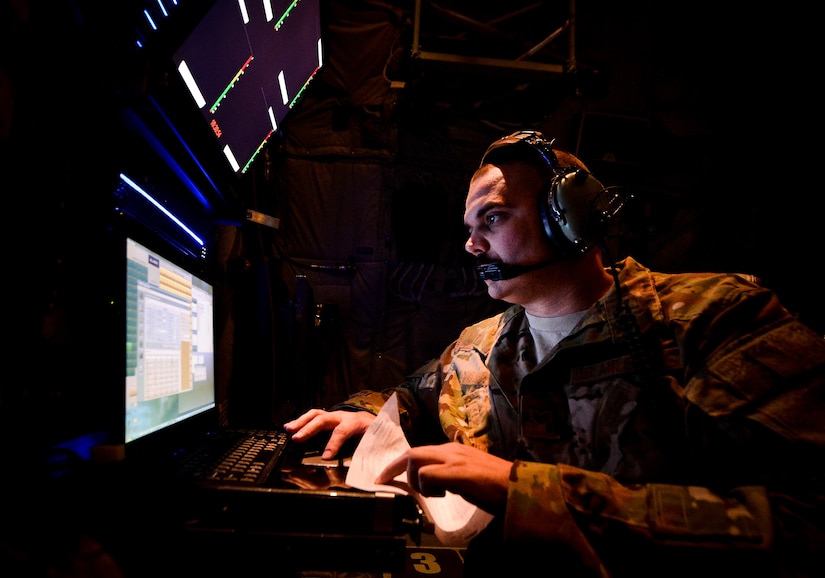
EC-130J Commando Solo systems operator monitors broadcast during mission in support of Operation Inherent Resolve at undisclosed location in Southwest Asia, September 5, 2017 (U.S. Air Force/Michael Battles)


Social Media Is a Game Changer

According to testimony by Clint Watts before the U.S. Senate Committee on the Judiciary, five social media functions are necessary for “full-spectrum social media campaigns: reconnaissance, hosting, placement, propagation, and saturation.”6 Russia used all of these in its information operations against the West. Briefly, reconnaissance in social media equates to knowing the target audience, and hosting refers to the site, such as YouTube, Facebook, or Twitter. Placement, during the Cold War, referred to placing forged items in news outlets that unknowingly published the items as authentic. In current usage, it is placing “digital forgeries” on sites such as 4chan and Reddit that then spread to mainstream sites, fueling conspiracy theories and false narratives. Propagation refers to spreading narratives broadly and quickly, which social media particularly enables through such means as bots that cause news items to trend, increasing the likelihood they will jump to mainstream media. Finally, the networked nature of social media enables saturation in multiple types of media outlets, which lends credibility to false stories. According to Watts, Russia is the first entity to incorporate the “entire social media ecosystem” into its information operations.7


The Social Media Ecosystem

The combination of false news, social media, politics, conspiracy theories, sensationalism—and human nature—creates a perfect propaganda storm. Studying 126,000 news stories shared from Twitter’s inception in 2006 until 2017 by approximately 3 million people, researchers found that false news spreads “further, faster, deeper, and more broadly” than legitimate news—even more so for false news about political subjects compared to items about “terrorism, natural disasters, science, urban legends, or financial information.”8 The researchers found that bots speed the dissemination of true and false stories equally; although bots may increase the amount of information spread through social media, it is humans that spread false news more quickly than factual news. Thus, false tweets reached more people than true tweets; true tweets rarely reached as many as 1,000 people, compared to false tweets, which routinely reached up to 100,000 people. Additionally, false information spread six times faster than true information, and false political information spread even more quickly and was more viral.9

The data scraping enabled by firms such as Cambridge Analytica is an example of reconnaissance. Cambridge Analytica brought “big data and social media to an established military methodology—information operations—then turn[ed] it on the U.S. electorate.”10 The company analyzed potential voters’ social media profiles, then sent the users “micro-targeted” Facebook advertisements to influence their voting behavior. In 2017, the Cambridge Analytica chief executive officer (CEO) boasted at a marketing conference that he had about 5,000 separate bits of information on each of 220 million Americans and that his company had “played a significant role” in contributing to the success of the Presidential campaign. Cambridge Analytica applied analysis to these discrete bits of information gleaned from Facebook profiles and from publicly available information to “send the right people to the right ads through cookie matching, mail shots, set-top box viewing data matching, and highly targeted, non-public, paid Facebook posts often referred to as ‘dark ads.’”11

In 2014, Cambridge Analytica presented slides on how to disrupt elections to a Russian oligarch with strong ties to Vladimir Putin, ostensibly to solicit oil contracts.12 Coincidentally, Russia around this time began to use micro-targeting in social media to attempt to influence the 2016 U.S. Presidential election.13 In U.S. Senate committee hearings in 2018, when asked whether the 126 million users the Russian IRA targeted with Facebook ads were also among those whose data Cambridge Analytica accessed, Facebook CEO Mark Zuckerberg replied, “We believe it is entirely possible.”14

Whether or not Russia directly used data gained from Cambridge Analytica, by 2015 Russia was using social media to spread conspiracy theories to specific audiences surrounding issues that would become 2016 campaign hot buttons, including gun rights, big government, and Islamophobia. One of its targets, according to former Central Intelligence Agency director Michael Hayden, was a 2015 U.S. military exercise conducted in seven southern U.S. states called Jade Helm 15.15
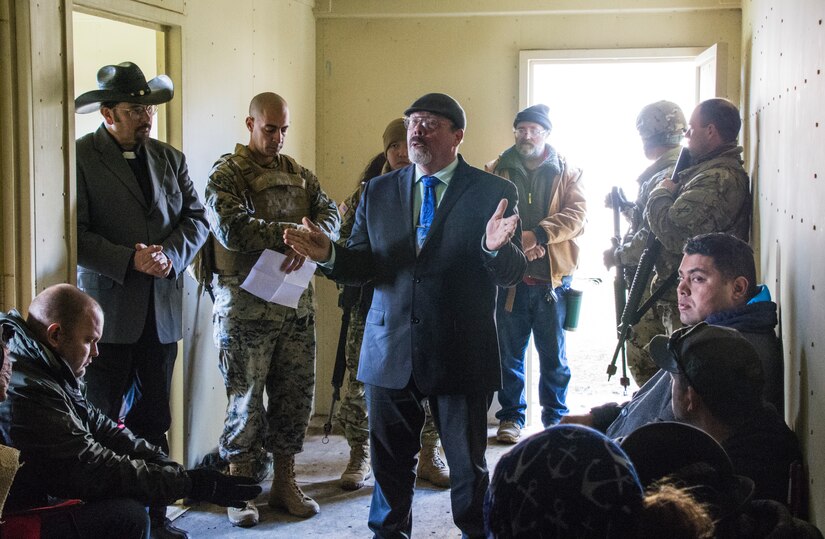
Jade Helm 15 was a U.S. Special Operations Command joint exercise conducted in Texas, New Mexico, Arizona, California, Nevada, Utah, and Colorado from July 15 to September 15, 2015, to improve special operations forces’ unconventional warfare capabilities.16 However, conspiracies propagated on Russia-controlled Instagram, Twitter, and YouTube accounts and Russia-created Facebook pages, such as Heart of Texas, claimed Jade Helm 15 variously was a psychological operation to build complacency about the military’s presence in the affected states to enable an eventual invasion, an international or United Nations (UN) operation to seize citizens’ guns, a military operation to round up political dissidents, a military operation to remove state and local political leaders who would oppose the Federal Government’s imposition of martial law, an operation using recently closed Walmarts to supply invading Chinese troops, or a military plan to impose martial law and disarm citizens in the wake of an apocalyptic meteor strike predicted to occur the same day Jade Helm 15 concluded.17 As bizarre as they seem, the conspiracies surrounding Jade Helm 15 garnered reactions from U.S. politicians—reactions that gave credence to the Russian information operations. These included Texas governor Greg Abbott calling on the Texas State Guard (equivalent to the National Guard) to monitor the exercise, Senator Rand Paul (R-KY) promising to “look into” the exercise, Senator Ted Cruz (R-TX) assuring constituents that he had inquired about the exercise from Pentagon officials “because the Federal Government has not demonstrated itself to be trustworthy,” and Representative Louie Gohmert (R-TX) demanding the military revamp the exercise “so the Federal Government is not intentionally practicing war against its own states.”18 The Jade Helm 15 information operation is an example of hosting, placement, propagation, and saturation.

Russia’s social media–enabled information operations continue to garner official responses, which give the impression that Russia’s false news is authentic. According to an NBC News report, more than 40 celebrities and politicians were “roped into retweeting or otherwise engaging with accounts created by a Russian ‘troll factory’ to millions of followers,” and 3,000 news outlets worldwide published articles containing embedded Russian troll farm tweets in the runup to the 2016 election—an example of stunningly successful placement.19 Cross-referencing a list of IRA Twitter handles with archived tweets by nearly 900 politicians and celebrities, NBC found the list of influential people who have retweeted or engaged with Russian propagandists includes President Donald Trump; his son, Donald Trump, Jr.; white nationalist Richard Spencer; Trump political associate Roger Stone; former UN Ambassador Samantha Power; former Ku Klux Klan grand wizard David Duke; Senator John Coryn (R-TX); Kellyanne Conway; Women’s March coordinator Linda Sarsour; Michael Flynn, Jr.; Ohio senator Nina Turner; Ted Cruz; former White House communications director Anthony Scaramucci; former White House press secretary Sean Spicer; Sean Hannity; Ann Coulter; Laura Ingraham; Jake Tapper; Lou Dobbs; Nikki Minaj; Sarah Silverman; Trevor Noah; the Washington Post; Breitbart; Buzzfeed; the Daily Mail; UN officials; academics; and authors from both the right and left.20 Celebrity retweeters who agree with the original tweets add credibility to the Russian propaganda. But even when celebrities disagree with the original sentiment, their celebrity status aids in the propaganda dissemination through the social media phenomenon of trending.


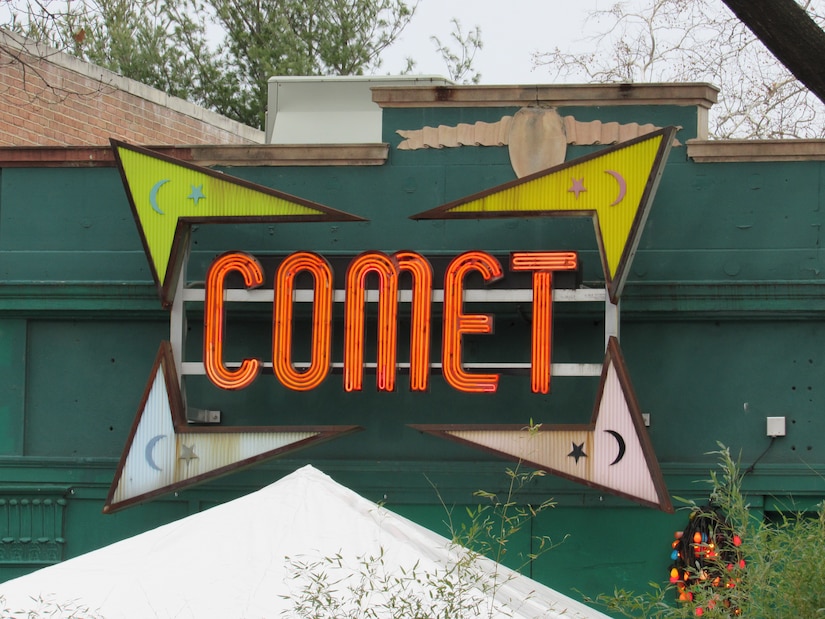
Comet Ping Pong façade in Washington, DC, December 11, 2016 (Courtesy Farragutful)

Social media groups tend to share worldviews, in a phenomenon called homophily.21 Homophily and data scraping enabled Russia to target social media network groups most likely to believe the information operations message and most likely to share it with similarly minded groups. In this manner, a false news item can metastasize quickly from a small number of discrete cells to a trending conspiratorial cancer in a matter of days or hours. The Comet Ping Pong conspiracy provides an example.

The information operation involving the “news” that Hillary Clinton and other Democrats were pedophiles running a sex ring out of a restaurant, Comet Ping Pong, in Washington, DC, almost certainly began with the Russian military intelligence service hack of John Podesta’s email server on March 19, 2016. Among those emails were exchanges between Podesta and his friend, Comet Ping Pong owner James Alefantis.22 WikiLeaks published the hacked emails on October 7, 2016, and by late October, the first allegations about Comet Ping Pong appeared in a few posts on 4chan and another anonymous message board that purported to cater to New York Police Department (NYPD) users. Within hours of the putative NYPD post, a real person posted about the alleged sex ring on Facebook, citing her “NYPD source.” Four days later, the conspiracy theory–themed show, Info Wars, broadcasted the story. The conspiracy also was mentioned on a law enforcement Facebook page, and from there a Russian bot posing as a U.S. Air Force veteran posted it on Twitter. The bot, whose profile picture shows a middle-aged woman, has followers that include former Trump deputy assistant Sebastian Gorka and former National Security Adviser Michael Flynn. Eventually, the Comet Ping Pong conspiracy would be shared 1.4 million times, including by at least 14 Russian bots and by real people including Donald Trump, Jr.; Paul Manafort; Ann Coulter; and Roger Stone. On December 4, 2016, a North Carolina man fired an AR-15 rifle in the occupied Comet Ping Pong restaurant, seeking to free the children he thought were held there as sex slaves for the Clintons and their friends.23 As of June 2018, a cursory search revealed multiple current social media posts on YouTube, Twitter, and Facebook claiming “Pizzagate” is real and that the Clintons and Democrats are continuing to run pedophile and human-trafficking rings.

Why would Russia promote conspiracy theories as part of its information operations? Russia scholar Ilya Yablokov asserts it is because the conspiracy theories are “a specific tool of Russian public diplomacy aimed at undermining the policies of the U.S. Government.”24 Crucially, the conspiracy theories—and the information operations—are not challenges to ideology; Russia’s information operations today are not a reprise of Soviet-era communism-versus-capitalism battles for hearts and minds. The current goal for Russia is to “undermine trust in information generally.”25 Among the ways to do so is to use specific, trustworthy messengers, which is where Russia’s use of stolen social media profiles and micro-targeted outreach come in.

In early June 2016, the Web site DCLeaks went live, featuring stolen emails from the Democratic National Committee. Eventually DCLeaks would post emails stolen from more than 300 high-ranking government and military officials. The U.S. Intelligence Community assesses DCLeaks to be linked to Russian military intelligence and the Russian hacking entity Guccifer 2.0.26 Within days of DCLeaks’s launch, “Melvin Redick,” allegedly of Harrisburg, PA, posted a link to DCLeaks on multiple Facebook group pages.27 Melvin Redick, however, does not exist. He is a fake persona created by Russian actors using the stolen Facebook profile of a Brazilian salesman.28 Similar posts by “Alice Donovan” and “Katherine Fulton” appeared on Facebook the same day.29 As with Melvin Redick, Alice Donovan and Katherine Fulton are fake personas created by Russian cyber actors. Their posts targeted real Facebook users who Russian cyber actors determined, through psychometric profiling such as that done by Cambridge Analytica, would be most susceptible to their messages. In concert with the Facebook posts, hundreds of Twitter posts also linked to DCLeaks, Guccifer 2.0, or similar sites associated with Russian intelligence. Many of these were fueled by bots, some hijacked legitimate Twitter accounts, and many included the Twitter handles of mainstream news organizations or influential accounts, including @realDonaldTrump.30 These events are examples of reconnaissance, hosting, placement, propagation, and saturation.

A Florida voter was one of the people Russia selected as part of its micro-targeting reconnaissance efforts. In August 2016, a stranger sent her a private message on Facebook from a Russia-affiliated fake Facebook group called Being Patriotic, asking her to organize a pro-Trump rally. The Russians chose well in targeting this woman, who showed up for the rally dressed as Hillary Clinton in a prison jumpsuit.31 In addition to that person (who was not paid), Russia used micro-targeting to pay multiple Floridians to build cages and pose as Clinton behind bars.32 Another person, also from Florida, responded to a Being Patriotic Facebook request that he host a pro-Trump gathering.33 Similarly, another Floridian agreed to wave pro-Trump signs at a rally after receiving a phone call in August 2016 from a stranger from a Russian front group called Florida Goes Trump.34 Yet another Floridian received a phone call out of the blue, followed by emails from people she thought to be college students from Texas but who actually were Russians.35 She received about $600 and a script from the Russians to don a Hillary Clinton mask and an orange jail jumpsuit to participate in one of 20 pro-Trump rallies in Florida scheduled for the same day in August. And still another individual received a similar payment after Russians posing as Americans contacted him on the Being Patriotic Facebook page, asking him to build a cage as part of the same rally.36


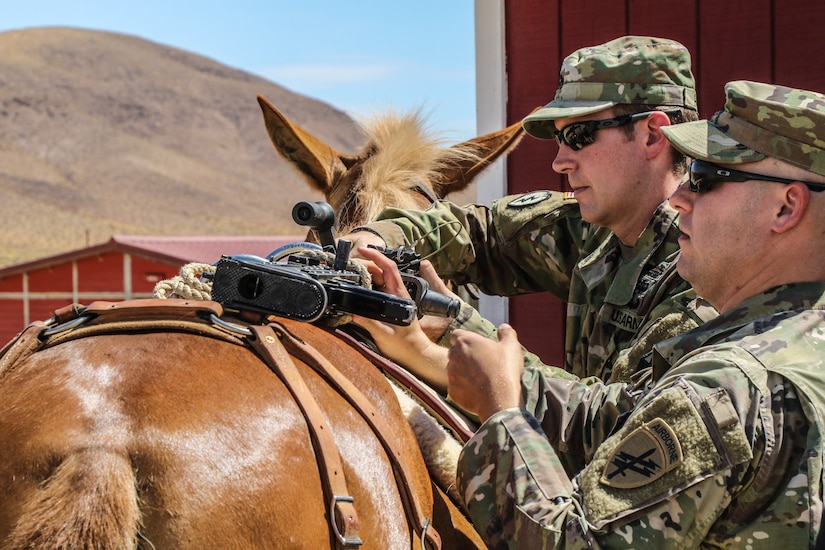
Soldiers from Bronco 71 Team, operating with members of civil affairs, psychological operations, and information operations trainers, tie M240B machine gun to saddle during mule packing training, August 1, 2017, Fort Irwin, California (U.S. Army/Austin Anyzeski)

None of the targeted Americans, when informed of the Russian origins of the requests for political activity, considered the Russian interference a problem. They dismissed concerns over the Russian effort as a “waste of time,” insisted they would have held rallies for Trump or parodied Clinton anyway without Russian trickery, and claimed the Russian efforts had no effect because the targeted voters “didn’t need persuading.”37

Many of the examples above demonstrate the psychological aspects of social media that make it so effective as a force multiplier in information operations. They show Russia’s use of psychological factors such as homophily, or retweets by trusted or influential people, or receiving phone calls, emails, and private messages from “friends,” to pressure its adversaries to accept false stories as truthful. In addition to these, Russia also exploits the fact that social media itself has been designed to activate areas in the brain associated with rewards and addiction.

According to neuroscientist Shannon Odell, people use social media such as Facebook and Twitter for two reasons: to connect with people and to control the impressions they make on others. The “like,” “share,” or “retweet” is positive reinforcement for both of those motivators, activating neural pathways for reward and addiction.38 Additionally, when users in one experiment were shown photographs, the photographs with more “likes” activated the brain’s reward circuitry more than the photographs with fewer “likes.” People are apt to approve of social media posts their friends approve of, even if those “friends” are strangers.39 Yet another study corroborates the power of the “like,” finding that social media users are more likely to adopt those emotions that are “over-expressed in their social network.”40 The level of emotional “contagion” is significantly influenced when the agent seeking to spread an idea uses bots. Russian information operations benefited from not only the mechanics of bot propagation and troll farm employees generating multiple “likes” and “shares” to influence trends algorithms, but also the psychological tendencies of humans exposed to bot propagation and to “peer group” emotions. A user confronted with false news on social media that comes appended with hundreds of bot-generated “likes” is psychologically apt to believe and spread the false news.

Among the most pervasive questions regarding social media and false news in the 2016 U.S. election is did they make a difference in the final vote tally. A definitive answer is difficult. However, according to one scholarly study and Washington Post analysis, the data correlate with an affirmative response. Using multiple regression analyses, Ohio State University researchers concluded that believing false news encountered on social media was among the top four variables predicting that a voter who previously supported Barack Obama would “defect from the Democratic ticket in 2016.” Respondents to an Ohio State survey who believed at least one false news item plucked from social media were 4.5 times more likely to have voted against Clinton than respondents who believed none of the false news items in the survey.41 Using the Ohio State data in predictive probability analysis, the Washington Post polling director assessed that false news likely cost Clinton 4.2 percent of votes overall and approximately 2.2 percentage points in the battleground states of Michigan, Pennsylvania, and Wisconsin. In the 2016 election, Clinton lost Michigan by 0.2 percentage points, Pennsylvania by 0.72 percentage points, and Wisconsin by 0.76 percentage points.42


Europe’s Answer to Russian Information Operations

Finland is the commonly cited example of how to counter Russia’s information operations. Finland’s tactics include a public diplomacy program with support from the Finnish president, who declared it the responsibility of every citizen to combat Russian information operations, and support from the prime minister’s office, which enrolled hundreds of government officials in programs to understand how disinformation spreads. Experts also credit Finland’s public education system—which ranks top in the world—with building critical thinking skills that help strengthen Finns against disinformation. Additionally, Finns have a high level of trust in their government and a high level of distrust for Moscow. Finland also has demographics to thank for its ability to fend off Russian propaganda; the Finnish population of 5.5 million is quite homogeneous, with a minimal number of Russian speakers.43 Only 3.5 percent of people living in Finland are foreign born, one of the lowest rates in the European Union (EU), and the Russian population in Finland is 0.5 percent, compared to 93 percent native Finns.44 Finns are more alike than they are different from one another, which makes it difficult for information campaigns focused on exploiting social rifts to take hold.


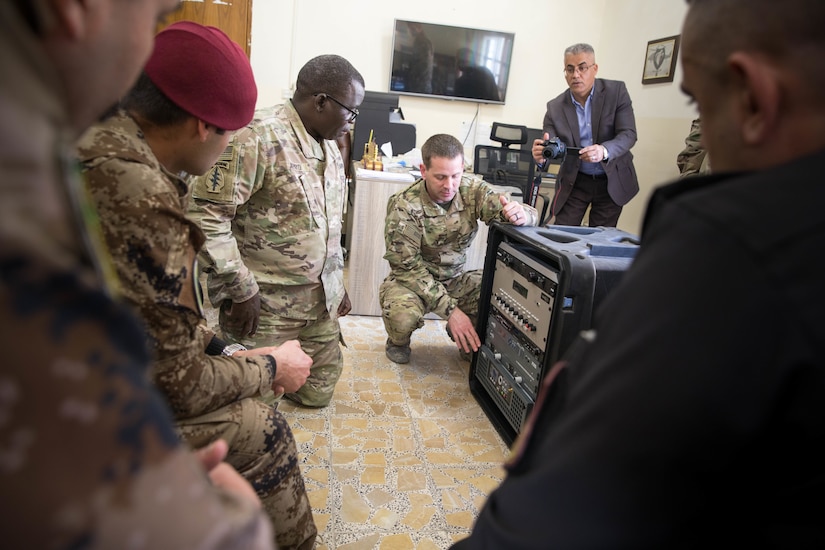
U.S. psychological operations Soldiers with Combined Joint Special Operations Task Force–Iraq conduct radio-in-a-box training with members of Iraqi Counter-Terrorism Service psychological operations team, in Baghdad, February 10, 2019 (U.S. Army/Sarah K. Anwar)

Other Baltic nations, such as Latvia, Lithuania, and Estonia, have been less successful against Russian information operations. These nations have larger numbers of Russian speakers among their populations and the strong presence of the Russian-language, Russia-owned television station, Channel One. In Finland, the Russia-owned, Russian-language Sputnik television station lacked enough viewers to remain operational; in Latvia, Lithuania, and Estonia, government moves to block Russian programming backfired, leading to protests from the Russian populations in those countries and feeding the Russian propaganda narrative of marginalization.45 The Baltic states do focus on countering Russian propaganda, but “if you only focus on countering, you’re on their territory,” stated a member of the Strategic Communications Center of Excellence in Latvia.46 Finland is an outlier, then, and it seems unfair to suggest others use it as a model, when the variable that likely works most toward Finland’s favor—its homogeneity—is outside other nations’ control. Other European countries have been tackling the Russian information operations problem, including, in some cases, the social media aspect of the operations. Some examples follow:
  • Tracking False News
    • Britain, France, Germany, the Czech Republic, the Netherlands, Switzerland, Finland, Sweden, Ukraine, Latvia, and Slovakia maintain sites to track false news and social media conspiracy theories.47
    • The EU’s EAST Stratcom Task Force publishes a weekly disinformation review in 18 languages—including calling out fake fact-checkers that appear to be the work of Russia.48
  • Working with Media, Social Media, and Advertisers
    • More than 1,400 advertisers in Slovakia are boycotting a list of false Web sites compiled by a nonprofit researcher.49
    • The night before the French presidential election, Russian military intelligence hackers released hacked emails and documents connected to then-candidate Emmanuel Macron. Most French media outlets agreed to election commission requests to refrain from publishing the hacked documents.50
    • Facebook agreed to requests from France and Britain to disable multiple thousands of false accounts connected to elections.51
    • Sweden urges all mainstream media to fact-check news stories.52 Mainstream media, of course, is not the major purveyor of false stories, and Sweden so far is doing nothing about the Russian trolls that are averaging 2,000 comments per person, per inflammatory news item posted on a right-wing site.53
  • Legal Measures
    • The French electoral code makes it illegal to “broadcast to the public by any means of electronic communication anything that could be considered electoral propaganda.”54
    • The EU has enacted a code of practice against disinformation aimed at social media companies that requires them to prevent “disinformation and the manipulative use of platforms’ infrastructure.”55
    • On May 25, 2018, the EU enacted the General Data Protection Regulation (GDPR), which applies to all companies doing business in the EU regardless of the companies’ locations. The GDPR guarantees EU citizens the right to know of data breaches within 72 hours, the right to access their data from social media companies and to know where and for what purpose their data is used, the “right to be forgotten,” the right to data portability, and the right to privacy by design—that is, the inclusion of data protection from the onset of designing systems. Failure to abide by the GDPR can result in tiered fines of up to 4 percent of profits or 20 million euros.56
  • Political Cooperation. German political parties agree not to use bots in their social media campaigns. (Russia continues to use bots on social media in Germany, however.)57
  • Public Diplomacy. Sweden distributes pamphlets advising Swedes what to do in case of war with Russia, or terrorist attacks, in an attempt to shape how Swedish citizens think about Russia.58
  • Countermessaging
    • The United Kingdom, Germany, Latvia, Lithuania, and Estonia are countermessaging Russia Today and Sputnik “news” items.59
    • Also, in Lithuania, citizen volunteers who call themselves elves “identify and beat back the ‘trolls’ employed on social media to spread Russian disinformation.”60
  • Government Initiatives. In Sweden, the Swedish Civil Contingencies Agency, which is roughly equivalent to the U.S. Department of Homeland Security, monitors Web sites for false, inflammatory stories.61


What About the United States?

The United States shares some challenges with its European partners in fighting Russian information operations and also has some U.S.-specific challenges. The United States is far from homogeneous; according to the Census Bureau in 2017, about 60.7 percent of the population is white, 18.1 percent is Hispanic (which can be any race), 13.4 percent is black, 5.8 percent is Asian, 2.7 percent are mixed race, and 1.5 percent are other.62 Russia laser-targeted racial and social divides in America during the runup to the 2016 election, as well as controversies over immigration, gun control, Islamophobia, gay rights, and other divisive topics. Russia continues, post-election, to use social media in information operations to “create general distrust or confusion about information sources by blurring the lines between fact and fiction.”63

The United States is unlikely to enact a domestic propaganda program such as Finland’s. Reforms of the Smith-Mundt Act in 2013 allow domestic broadcasts of State Department programming produced for foreign audiences, such as Voice of America broadcasts, but forbid broadcasting propaganda targeting American audiences.64 However, reactions from some politicians and defense officials to the reforms indicate the suspicion many in the United States feel toward government information programs. Opponents claimed the reforms would make Americans vulnerable to government disinformation campaigns to “prop up unpopular policies” and “remove protections” against U.S. Government information campaigns targeting U.S. citizens that may be “inaccurate or completely false.”65 That the opponents were themselves presenting inaccurate information about the new Smith-Mundt Act did little to reduce confusion surrounding the reforms, but much to illuminate the distrust many Americans likely would feel toward a domestic government information campaign.


Civilian role players help 80th Training Command’s psychological operations students learn to negotiate difficult terrain of cultural, social, and political differences during training exercise at Fort Hunter Liggett, California, February 6, 2019 (U.S. Army/Cynthia McIntyre) 
 
After Facebook CEO Mark Zuckerberg’s House and Senate testimony on Cambridge Analytica’s breach of users’ data, Senator Amy Klobuchar (D-MN) and Senator John Kennedy (R-LA) introduced the Social Media Privacy Protection and Consumer Rights Act, which is similar to the GDPR. The bill requires social media companies to disclose to users what data are being collected on them, who has access to user data, and how companies that have that access are using the data. The bill also allows users to opt out of having their data collected and to demand that Web sites delete any data that had been collected on them.66 As of this writing, the proposal has been sitting in the Commerce, Science, and Transportation Committee since late April 2018.67


Conclusion: A Social Media Problem Requires a Social Media Solution

Measures such as the Code of Practice on Disinformation, GDPR, and Social Media Privacy Protection and Consumer Rights Act will mitigate social media–enabled information operations because they empower privacy and data protection. However, these measures will not eliminate the psychological aspects of social media that make it such a powerful tool for information operations. Humans are motivated by desire and fear. Just as “likes” activate areas of the brain associated with desire, conspiracy theories and false news about other races, other religions, and other opinions activate fears in susceptible audiences. What makes the United States strong—its technology, its diversity, its commitment to free speech—also, unfortunately, makes it enduringly vulnerable to information operations by an adversary such as Russia.

The Constitution prohibits the U.S. Government from restricting free speech. But private companies are free to set their own limits, and indeed, social media companies such as Facebook have removed hundreds of fake accounts since the hearings looking into Russia’s use of social media in its information operations. Public scrutiny can pressure private companies to prohibit data mining and practice due diligence against foreign entities using their platforms against the United States. The United States can mitigate—somewhat—social media–enabled information operations. But governments cannot mitigate neuropsychology. No amount of critical thinking education, anti-Russia pamphleteering, domestic propaganda, or “outing” Russia (recall the Americans duped by Russians who, after learning the truth, stated they were unconcerned about being Russian targets) will eliminate the neural feedback loop that is reinforced every time users are deceived by hundreds of artificially placed “likes” or retweets. Humans are wired to believe. JFQ


Notes

1 Jill Dougherty, “How the Media Became One of Putin’s Most Powerful Weapons,” The Atlantic Monthly, April 21, 2015, available at <www.theatlantic.com/international/archive/2015/04/how-the-media-became-putins-most-powerful-weapon/391062/>.
2 United States v. Internet Research Agency et al., Case 1:18-cr-00032-DLF, February 16, 2018, available at <www.justice.gov/file/1035477/download>.
3 Clint Watts, “Clint Watts’ Testimony: Russia’s Info War on the U.S. Started in 2014,” The Daily Beast, March 30, 2017, available at <www.thedailybeast.com/clint-watts-testimony-russias-info-war-on-the-us-started-in-2014>.
4 U.S. Senate Committee on Foreign Relations, “Putin’s Asymmetric Assault on Democracy in Russia and Europe: Implications for U.S. National Security,” S. Prt. 115-21, 115th Cong., 2nd sess., 2018, available at <www.foreign.senate.gov/imo/media/doc/FinalRR.pdf>.
5 Ibid.; Richard Gunther, Paul A. Beck, and Erik C. Nisbet, “Fake News May Have Contributed to Trump’s 2016 Victory,” Ohio State University, March 8, 2018, available at <www.documentcloud.org/documents/4429952-False-News-May-Have-Contributed-to-Trump-s-2016.html>.
6 Clint Watts, “Extremist Content and Russian Disinformation Online: Working with Tech to Find Solutions,” Judiciary Subcommittee on Crime and Terrorism questions for the record, October 31, 2017, and hearing, November 7, 2017, available at <www.judiciary.senate.gov/imo/media/doc/Watts%20Responses%20to%20QFRs.pdf>.
7 Ibid.
8 Soroush Vosoughi, Deb Roy, and Sinan Aral, “The Spread of True and False News Online,” Science 359, no. 6380 (March 9, 2018), 1146–1151, available at <http://science.sciencemag.org/content/359/6380/1146.full>.
9 Ibid.
10 Carole Cadwalladr, “‘I Made Steve Bannon’s Psychological Warfare Tool’: Meet the Data War Whistleblower,” The Guardian, March 18, 2018, available at <www.theguardian.com/news/2018/mar/17/data-war-whistleblower-christopher-wylie-faceook-nix-bannon-trump>.
11 Charles Kriel, “Fake News, Fake Wars, Fake Worlds,” Defence Strategic Communications 3 (Autumn 2017), 172–190.
12 Cadwalladr, “‘I Made Steve Bannon’s Psychological Warfare Tool.’”
13 United States v. Internet Research Agency et al.
14 “Transcript of Mark Zuckerberg’s Senate Hearing,” Washington Post, April 10, 2018, available at <www.washingtonpost.com/news/the-switch/wp/2018/04/10/transcript-of-mark-zuckerbergs-senate-hearing/?utm_term=.ce270a6edca3>.
15 Cassandra Pollock and Alex Samuels, “Hysteria Over Jade Helm Exercise in Texas Was Fueled by Russians, Former CIA Director Says,” Texas Tribune, May 3, 2018, available at <www.texastribune.org/2018/05/03/hysteria-over-jade-helm-exercise-texas-was-fueled-russians-former-cia-/>.
16 U.S. Army Special Operations Command, “Request to Conduct Realistic Military Training (RMT) JADE HELM 15,” 2015, available at <https://docs.google.com/file/d/0B3axduuybL0jdjZQUjhsSmJsZTA/edit>.
17 Jim Shea, “Thank You Texas and Good Luck with the Invasion,” Hartford Courant, May 17, 2015, available at <www.courant.com/features/too-shea/hc-shea-weekinreview-0517-20150517-column.html>; Jon Austin, “U.S. Military Secretly Planning for Giant Asteroid That Will Wipe Out Mankind in September,” Daily Express (London), June 8, 2015, available at <www.express.co.uk/news/weird/583002/US-military-secretly-preparing-asteroid-wipe- out-mankind-September-Jade-Helm>.
18 Pollock and Samuels, “Hysteria Over Jade Helm Exercise in Texas Was Fueled by Russians.” Patrick Svitek, “Jade Helm 15: The Black Helicopters Are Coming. Well, Maybe Not,” Texas Tribune, April 30, 2015, available at <www.texastribune.org/2015/04/30/abbotts-letter-puts-jade-helm-national-stage/>; David Weigel, “Ted Cruz Says He Has Asked the Pentagon for Answers on Jade Helm 15,” Bloomberg, May 2, 2015, available at <www.bloomberg.com/news/articles/2015-05-02/ted-cruz-says-he-has-asked-the-pentagon-for-answers-on-jade-helm-15>; Louie Gohmert, “Gohmert Statement on Jade Helm Exercises,” May 5, 2015, available at <https://gohmert.house.gov/news/documentsingle.aspx?DocumentID=398216>.
19 Ben Popken, “Russian Trolls Duped Global Media and Nearly 40 Celebrities,” NBC News, November 3, 2017, available at <www.nbcnews.com/tech/social-media/trump- other-politicians-celebs-shared-boosted-russian-troll-tweets-n817036>.
20 Ibid.
21 Jarred Prier, “Commanding the Trend: Social Media as Information Warfare,” Strategic Studies Quarterly 11, no. 4 (2017), 50–85.
22 Cecilia Kang, “Fake News Onslaught Targets Pizzeria as Nest of Child-Trafficking,” New York Times, November 21, 2016, available at <www.nytimes.com/2016/11/21/technology/fact-check-this-pizzeria-is-not-a-child-trafficking-site.html>.
23 Amanda Robb, “Anatomy of a Fake News Scandal,” Rolling Stone, November 16, 2017, available at <www.rollingstone.com/politics/politics-news/anatomy-of-a-fake-news-scandal-125877/>.
24 Ilya Yablokov, “Conspiracy Theories as a Russian Public Diplomacy Tool: The Case of Russia Today (RT),” Politics 35, no. 3/4 (2015), 301–315.
25 Kate Starbird, “Information Wars: A Window into the Alternative Media Ecosystem,” HCI and Design at UW, March 14, 2017, available at <medium.com/hci-design-at-uw/information- wars-a-window-into-the-alternative-media-ecosystem-a1347f32fd8f>.
26 “Background to ‘Assessing Russian Activities and Intentions in Recent U.S. Elections’: The Analytic Process and Cyber Incident Attribution,” ICA 2017-01D (Washington, DC: Office of the Director of National Intelligence, January 6, 2017), available at <www.dni.gov/files/documents/ICA_2017_01.pdf>.
27 Scott Shane, “The Fake Americans Russia Created to Influence the Election,” New York Times, September 7, 2017, available at <www.nytimes.com/2017/09/07/us/politics/russia-facebook-twitter-election.html>.
28 Scott Shane, “Mystery of Russian Fake on Facebook Solved, by a Brazilian,” New York Times, September 13, 2017, available at <www.nytimes.com/2017/09/13/us/politics/russia-facebook-election.html>.
29 Shane, “The Fake Americans Russia Created to Influence the Election.”
30 Ibid.
31 Anton Troianovski et al., “The 21st-Century Russian Sleeper Agent Is a Troll with an American Accent,” Washington Post, February 17, 2018, available at <www.washingtonpost.com/business/technology/the-21st-century-russian-sleeper-agent-is-a-troll-with-an-american-accent/2018/02/17/d024ead2-1404-11e8-8ea1-c1d91fcec3fe_story.html?utm_term=.aa5c01a98cfa>.
32 United States v. Internet Research Agency et al.
33 Troianovski et al., “The 21st-Century Russian Sleeper Agent Is a Troll with an American Accent.”
34 Ashley Parker and John Wagner, “‘Go Donald!’: Inside the Russian Shadow Campaign to Elect Trump,” Washington Post, February 16, 2018, available at <www.washingtonpost.com/politics/go-donald-inside-the-russian-shadow-campaign-to-elect-trump/2018/02/16/dea562c2-134a-11e8-9065-e55346f6de81_story.html?utm_term=.a1ce4565b4bd>.
35 Frank Cerabino, “Local Trump Supporters Shrug Off Being Paid and Played by Russians,” Palm Beach Post, February 23, 2018, available at <www.palmbeachpost.com/news/local-trump-supporters-shrug-off-being-paid-and-played-russians/3WCytHAHy3PodLVePU1PMK/>.
36 Ibid.
37 Parker and Wagner, “‘Go Donald!’”; Troianovski et al., “The 21st-Century Russian Sleeper Agent Is a Troll with an American Accent.”
38 Shannon Odell, “Your Brain on Social Media: Neuroscientist Shannon Odell Explores the Insatiable Effects and Drivers of Social Media Addiction,” PR Newswire, April 24, 2018.
39 “Social Media ‘Likes’ as Yummy as Chocolate,” Science Teacher 83, no. 6 (2016), 20–22.
40 Emilio Ferrara and Zeyao Yang, “Measuring Emotional Contagion in Social Media,” PLOS ONE 10, no. 10 (2015), 1–14, available at <https://journals.plos.org/plosone/article?id=10.1371/journal.pone.0142390>.
41 Gunther, Beck, and Nisbet, “False News May Have Contributed to Trump’s 2016 Victory.”
42 Aaron Blake, “A New Study Suggests False News Might Have Won Donald Trump the 2016 Election,” Washington Post, April 3, 2018, available at <www.washingtonpost.com/news/the-fix/wp/2018/04/03/a-new-study-suggests-fake-news-might-have-won-donald-trump-the-2016-election/?utm_term=.ddaa357e0020>.
43 Reid Standish, “Why Is Finland Able to Fend Off Putin’s Information War?” Foreign Policy, March 1, 2017, available at <http://foreignpolicy.com/2017/03/01/why-is-finland-able-to-fend-off-putins-information-war/>.
44 See “Finland Population 2019,” World Population Review, available at <http://worldpopulationreview.com/countries/finland-population/>; and “Finland Demographics Profile 2018,” Index Mundi/CIA World Factbook, available at <www.indexmundi.com/finland/demographics_profile.html>.
45 Standish, “Why Is Finland Able to Fend Off Putin’s Information War?”
46 Christian Caryl, “If You Want to See Russian Information Warfare at Its Worst, Visit These Countries,” Washington Post, April 5, 2017, available at <www.washingtonpost.com/news/democracy-post/wp/2017/04/05/if-you-want-to-see-russian-information-warfare-at-its-worst-visit-these-countries/?utm_term=.1ab2a9e9a132>.
47 Dana Priest and Michael Birnbaum, “Europe Has Been Working to Expose Russian Meddling for Years,” Washington Post, June 25, 2017, available at <www.washingtonpost.com/world/europe/europe-has-been-working-to-expose-russian-meddling-for-years/2017/06/25/e42dcece-4a09-11e7-9669-250d0b15f83b_story.html?utm_term=.8c9dd9d96071>.
48 “Behind the Scenes at the Swedish Troll Factory,” EU vs. Disinformation Campaign, February 20, 2017, available at <https://euvsdisinfo.eu/behind-the-scenes-at-the-swedish-troll-factory/>.
49 Priest and Birnbaum, “Europe Has Been Working to Expose Russian Meddling for Years.”
50 Alex Hern, “Macron Hackers Linked to Russian-Affiliated Group Behind U.S. Attack,” The Guardian, May 8, 2017, available at <www.theguardian.com/world/2017/may/08/macron-hackers-linked-to-russian-affiliated-group-behind-us-attack>; Priest and Birnbaum, “Europe Has Been Working to Expose Russian Meddling for Years.”
51 Priest and Birnbaum, “Europe Has Been Working to Expose Russian Meddling for Years.”
52 Michael Birnbaum, “Sweden Is Taking on Russian Meddling Ahead of Fall Elections. The White House Might Take Note,” Washington Post, February 22, 2018, available at <www.washingtonpost.com/world/europe/sweden-looks-at-russias-electoral-interference-in-the-us-and-takes-steps-not-to-be-another-victim/2018/02/21/9e58ee48-0768-11e8-aa61-f3391373867e_story.html?utm_term=.b871124aed50>.
53 “Behind the Scenes at the Swedish Troll Factory.”
54 Kim Willsher and Jon Henley, “Emmanuel Macron’s Campaign Hacked on Eve of French Election,” The Guardian, May 6, 2017, available at <www.theguardian.com/world/2017/may/06/emmanuel-macron-targeted-by-hackers-on-eve-of-french-election>.
55 Julia Fioretti, “EU Piles Pressure on Social Media Over Fake News,” Reuters, April 26, 2018, available at <www.reuters.com/article/us-eu-internet-fakenews/eu-piles-pressure-on- social-media-over-fake-news-idUSKBN1HX15D>.
56 General Data Protection Regulation portal, available at <www.eugdpr.org>.
57 Priest and Birnbaum, “Europe Has Been Working to Expose Russian Meddling for Years.”
58 Birnbaum, “Sweden Is Taking on Russian Meddling Ahead of Fall Elections.”
59 Caryl, “If You Want to See Russian Information Warfare at Its Worst, Visit These Countries.”
60 Priest and Birnbaum, “Europe Has Been Working to Expose Russian Meddling for Years.”
61 Ibid.
62 U.S. Census Bureau Quick Facts, 2017, available at <www.census.gov/quickfacts/fact/table/US/PST045217>. These percentages add to 102.2 percent. To reach the correct 100 percent, one has to subtract those who identified as “White alone” (76.6 percent) from those who identified as “White alone, not Hispanic or Latino” (60.7 percent). The resulting difference has to be subtracted from those who identified as “Hispanic or Latino.” The resulting difference of 2.2 percent, after subtracting from 102.2 percent, then corrects the overall percentage. The seemingly incorrect numbers are the result of overlapping identities.
63 Watts, “Clint Watts’ Testimony: Russia’s Info War on the U.S. Started in 2014.”
64 John Hudson, “U.S. Repeals Propaganda Ban, Spreads Government-Made News to Americans,” Foreign Policy, July 13, 2013, available at <https://foreignpolicy.com/2013/07/14/u-s-repeals-propaganda-ban-spreads-government-made-news-to-americans/>.
65 Michael Hastings, “Congressmen Seek to Lift Propaganda Ban,” Buzzfeed, May 18, 2012, available at <www.buzzfeednews.com/article/mhastings/congressmen-seek-to-lift-propaganda-ban>.
66 Harper Neidig, “Senators Introduce Bipartisan Privacy Bill,” The Hill, April 24, 2018, available at <https://thehill.com/policy/technology/384550-senators-introduce-bipartisan-internet-privacy-bill>.
67 “Social Media Privacy Protection and Consumer Rights Act of 2018,” 115th Cong., S.2728, 2018, available at <www.congress.gov/bill/115th-congress/senate-bill/2728>.